
SWIM LESSON INFORMATION
Quick Lesson Overview
Swimmingly offers private and small group swim instruction designed to meet swimmers at every stage — from early water comfort to advanced refinement.
Who Lesson Are For:
-Toddlers (2-2.5 years old)
-Preschool age (3-4 years old)
-Elementary (5-9 years old)
-Pre-teen/teens (10-17)
-Young Adults (18-25 years old)
-Adults (26+ years old)
How Lessons Are Structured:
-Private lessons for all ages
-Sibling back-to-back lessons
-Family shared lessons
-Small group options
-Accelerated lessons
How Lessons Work:
Choose how long and how often
Lession lengths:
-30, 45, or 60 minutes depending on age and goals
Frequency Options
-Weekly, Multi-weekly (recommended for skill retention), and Accelerated programs (recommended for fastest progress)
Full details, skill breakdowns, and pricing are outlined below.
Not sure which option fits your swimmer?
Reach out — I’ll guide you.
Swimmingly offers instruction for swimmers at a variety of developmental stages. Age groups provide general guidance, but lesson placement is based on each swimmer’s comfort level, experience, and readiness. Swim lessons are structured around both age and developmental stages in order to help swimmers build confidence, learn safety awareness, and develop strong skills. Skills are introduced and reinforced based on readiness. Progression is based on consistency, not age alone. Mastery develops through repetition. Each swimmer advances at their own pace.
Understanding Swim Age Groups and Skill Development
Finding the Right Starting Point
Swim instruction is structured around developmental stages rather than rigid levels. The sections below outline the skills, focus areas, and learning goals commonly introduced at each age range.
These age groups are general guidelines, not strict requirements. Children develop skills at different rates, and many swimmers may work on skills outside the typical age range depending on their experience, comfort, and readiness in the water. Placement is always based on the swimmer’s comfort, safety awareness, and current skill development.
If you're unsure where your swimmer fits, a brief enrollment inquiry helps determine the best starting point.
How Many Lessons Do Most Swimmers Need?
Every swimmer progresses at their own pace as skills develop through repetition and consistent practice, so the number of lessons needed can vary based on age, comfort in the water, coordination, and previous experience.
Some swimmers begin building confidence and foundational skills within several lessons, while others benefit from additional time to practice and strengthen their abilities. Many families find that 6–12 consistent lessons provide a strong starting point for developing water safety skills and swimming ability.
After the first lesson, it becomes easier to evaluate your swimmer’s comfort level and readiness, and we can provide better guidance on what progress may look like moving forward.
Consistent weekly lessons help swimmers retain skills and build confidence more effectively.
Because swimming skills develop over time, many families choose lesson packages or memberships to support consistent progress.
Swimmer Age Groups
Types of lessons
Toddler Water Introduction
Ages 2-2.5 years:
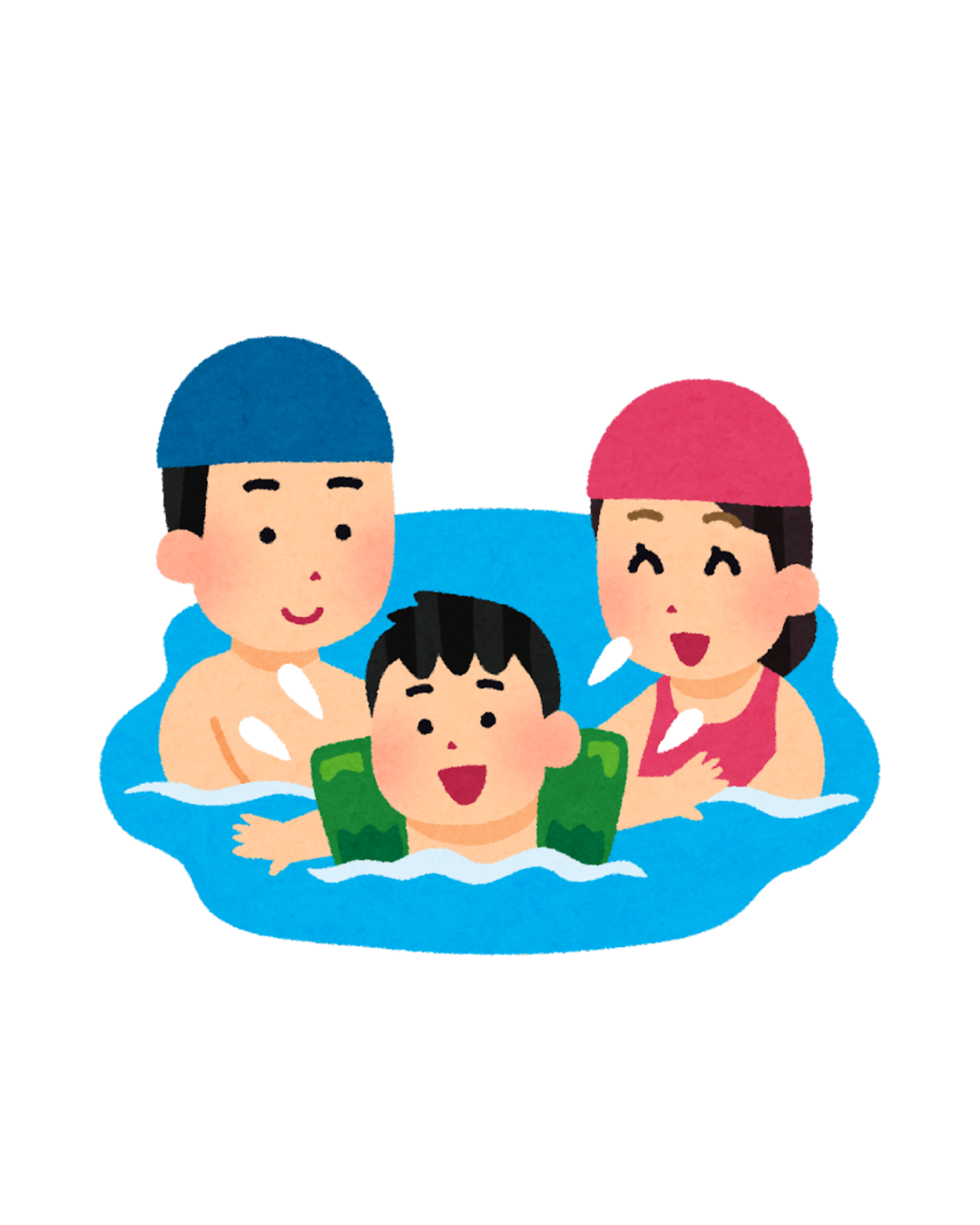
Lessons begin as early as age 1 and focus on comfort, safety, and positive water exposure — not independent swimming skills. At this stage, safety starts with comfort, routine, and positive exposure to the water. This stage is designed to build trust in the water — for both the child and the caregiver.
What to Expect:
• Parent-assisted sessions
• Emphasis on safety, comfort, and water awareness
• Gentle introduction to early swim skills
• Coaching for caregivers to reinforce habits between lessons
Sessions are scheduled as 30-minute time blocks. Active in-water engagement is typically shorter, with additional time used for acclimation, emotional regulation, and guided support based on each child’s readiness.
Consistency Matters:
Young swimmers benefit most from routine and repetition. Twice-weekly lessons are required to support comfort, trust, and steady progress.
Weekend toddler availability is limited and typically offered as a Saturday–Sunday pair.
Families should expect a longer-term progression at this stage, with more structured skill development typically beginning around age 3.
ISR (Infant Swimming Resource) instruction is not offered.
Ready to move forward? Continue below to review enrollment options and rates, then submit your lesson placement inquiry.
Toddler Water Intro Skills:
Water exposure now supports confidence later—without pressure
Learning to approach the pool calmly with an adult
Assisted sitting at the pool edge
Entering and exiting the water only with adult help
Responding to verbal cues (“stop,” “wait,” “sit”)
Early awareness that water requires adult supervision
Comfort being held in the water
Introducing breath control through bubbles
Assisted submersion when ready
Learning through play
Toddlers are not expected to perform independent safety skills.
Safety First Policy
If a child is unable to independently sit and wait in a designated safe zone, lessons will focus solely on teaching “sit and stay” behaviors. These skills are essential for water safety and must be mastered before swimming instruction can begin. Consistent reinforcement at home is required for progress.
Preschool
Ages 3-4years :
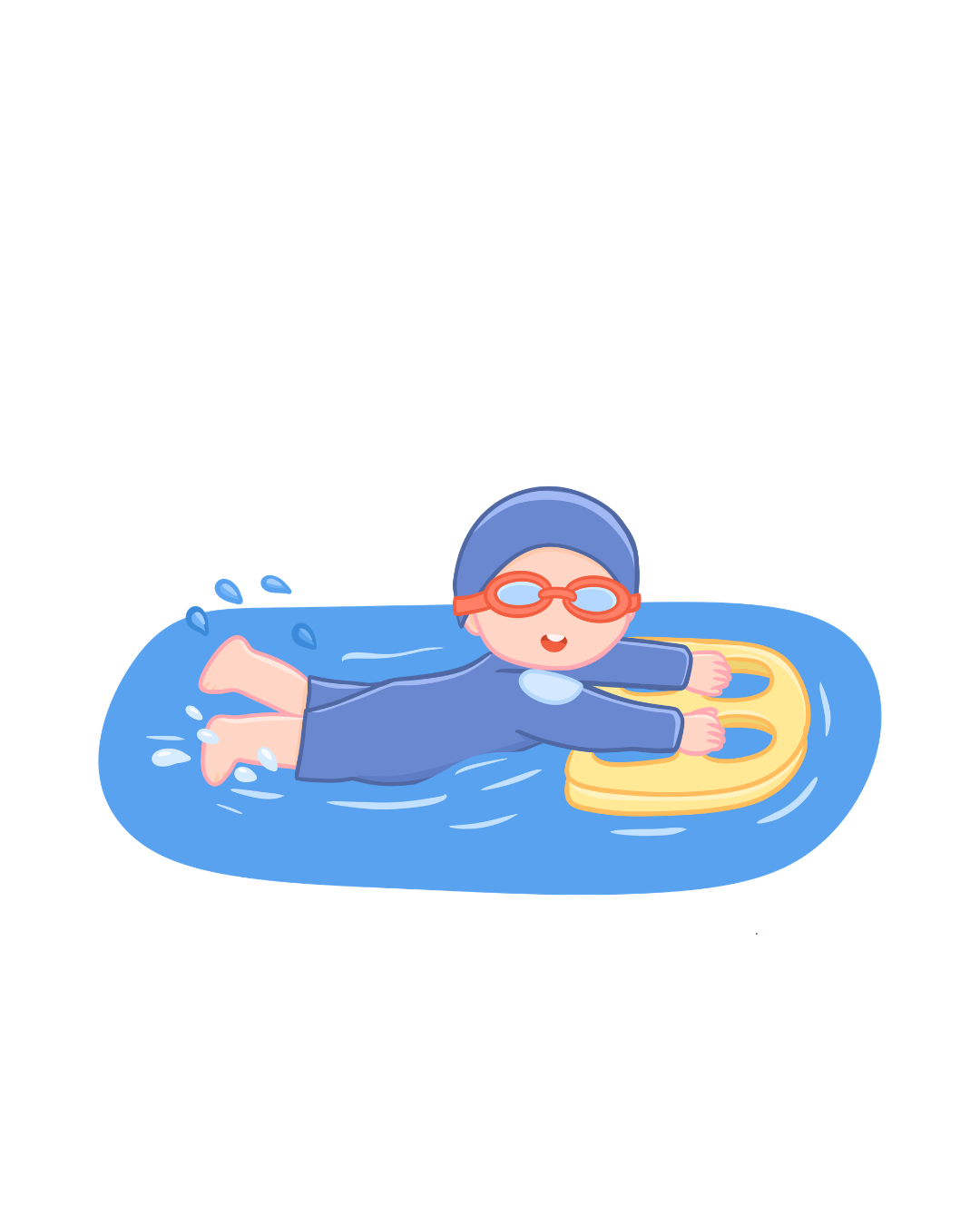
This is where water comfort becomes real learning. This is the most common starting point for young swimmers. Around age 3, children are developmentally ready to begin true swim instruction. They have the coordination, language skills, and attention span to follow directions, understand safety concepts, participate independtly, and build confidence in the water.
At this stage, we focus on:
• Water safety and independence
• Listening and responding to instruction
• Foundational swim skills and movement patterns
• Building confidence with healthy awareness (not fear)
Repetition and consistency allow skills to develop naturally, creating strong muscle memory and lasting confidence.
Swimming becomes intentional at this stage — focused on readiness, not rushing.
Ready to move forward? Continue below to review enrollment options and rates, then submit your lesson placement inquiry.
Preschool SKills:
Before 3, we’re teaching comfort. At 3, we’re teaching skills
Sitting and waiting independently in a designated safe zone
Entering the pool only with permission and exiting the pool independently
Turning to wall, basic self-rescue
Grabbing the wall or steps and traveling along the wall
Understand cause and effect (“If I blow bubbles, I don’t swallow water”)
Rolling to back to breathe
Floating to rest (assisted → independent)
Kicking with purpose
Beginning arm movements
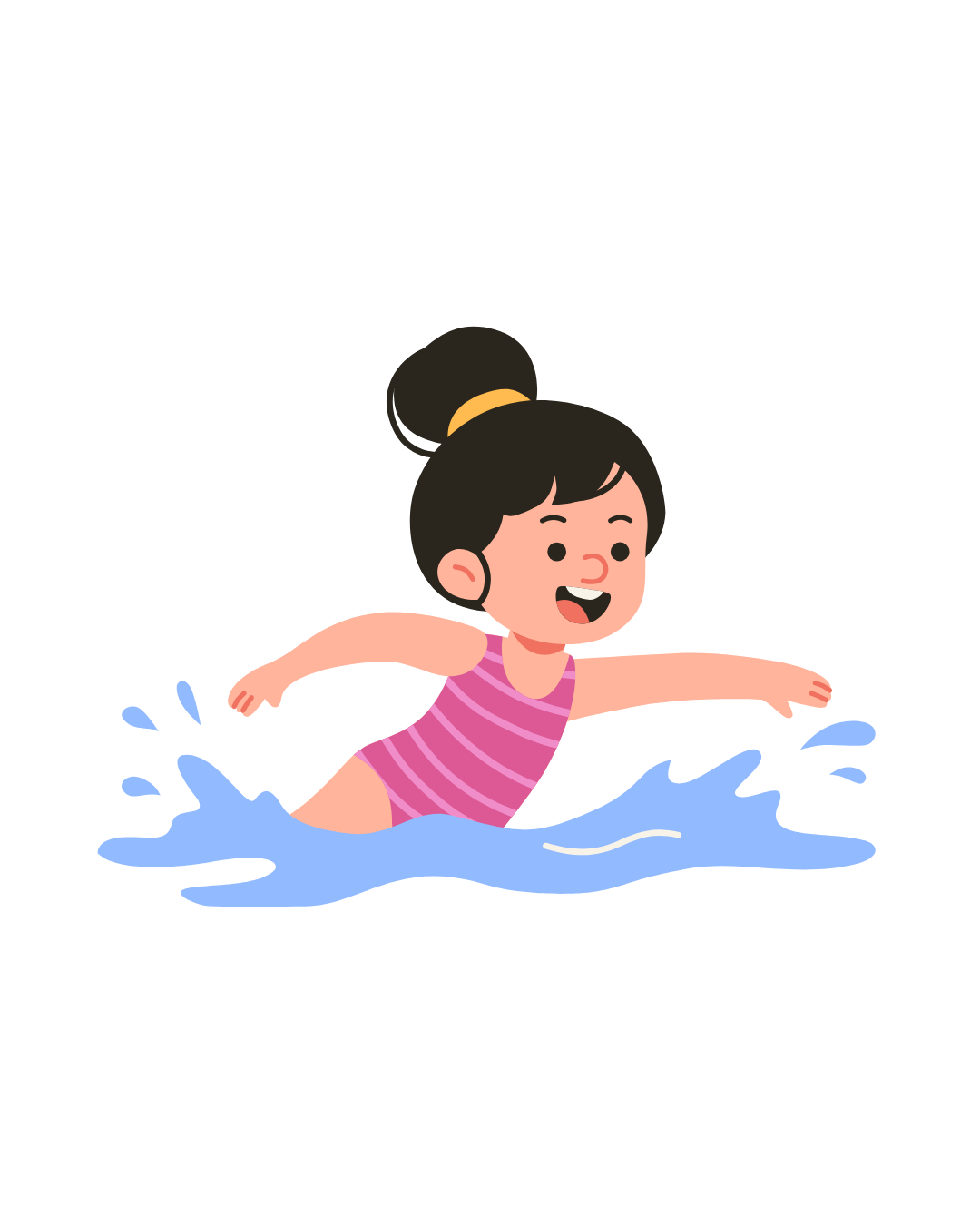
Elementary
Ages 5–9:
This is where swim skills begin to come together to really build strength, stamina, and confidence.
At this stage, children typically have stronger coordination, body awareness, and improved endurance. They have the ability to understand feedback and begin self-correcting allowing for them to focus for longer, more structured periods with detailed instruction.
Focus Areas:
• Building and refining foundational swim skills through repitition and consistency
• Strengthening coordination and movement patterns as well problem-solving skills
• Increasing confidence and independence in the water
• Developing practical, real-world water safety skills
Progress at this stage is cumulative — skills build over time through consistent practice, not speed.
Some swimmers are confident right away, while others are still developing trust in the water. Both are normal. Lessons continue to prioritize confidence, using encouragement and structure to support steady progress.
Coordination, confidence, and consistency take center stage.
Ready to move forward? Continue below to review enrollment options and rates, then submit your lesson placement inquiry.
Elementary SKills:
Foundation skills now lead to confident swimmers later.
Understanding basic pool rules
Increased awareness of personal limits
Safe water entries and exits
Independent front and back floating
Rolling to back when fatigued
Confident floating to rest for extended time
Recovering from unexpected submersion
Managing fatigue and breathing
Stroke refinement
Beginning treading water and ultimately increased duration
Controlled kicking with purpose
Coordinating arms, legs, and breathing
Safe submersion and breath control
Swimming to safety without assistance
Introduction to mechanics of front and back stroke
Increased endurance
Pre-teen/teens
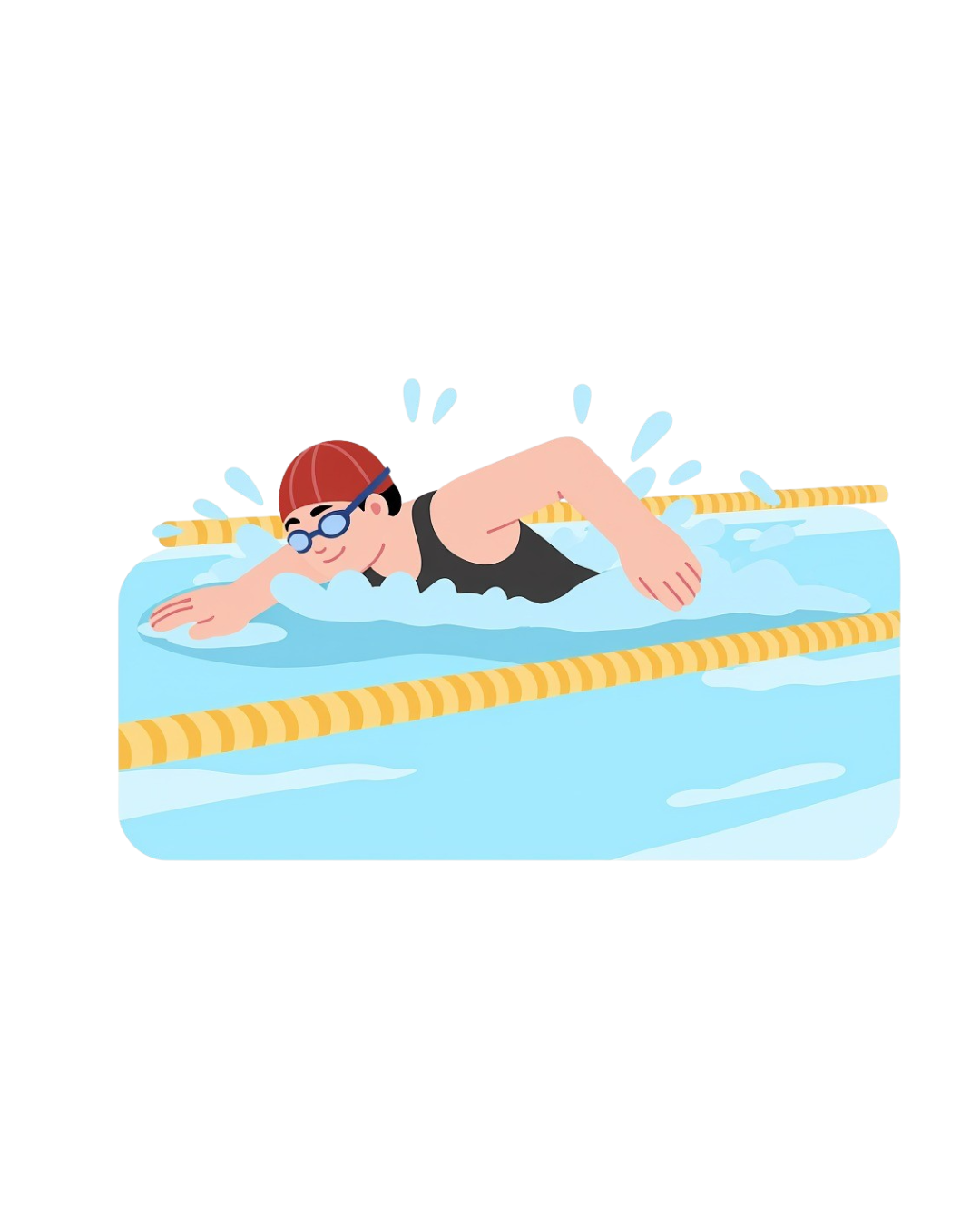
Ages 10-17:
At this age, swimmers are capable of refining skills, not just learning them. At this stage, swimmers move beyond learning skills and begin refining them.
Lessons focus on improving technique, control, and endurance while building efficiency and confidence in the water. Instruction becomes more detailed, with an emphasis on quality of movement rather than speed.
Focus Areas:
• Refining stroke technique and efficiency
• Building endurance and stamina
• Strengthening advanced water safety awareness
• Developing independence and decision-making in the water
Swimmers are encouraged to understand their movement, respond to feedback, and build strong, lasting habits through focused instruction.
The goal is independent, capable swimmers who can assess situations and respond appropriately. Strong habits are built through focused instruction.
Ready to move forward? Continue below to review enrollment options and rates, then submit your lesson placement inquiry.
Pre-Teen/Teen SKills:
Refinement now prevents struggle later
Stroke proficiency and refinement
Technique correction
Efficient controlled breathing patterns
Swim fitness and/or pre-competitive skills (without pressure)
Sustained treading water and survival skills
Managing panic and fatigue
Swimming longer distances to safety
Efficient resting strategies
Understanding water conditions and hazards
Responsible decision-making in the water
Safe behavior in recreational settings
Young adults
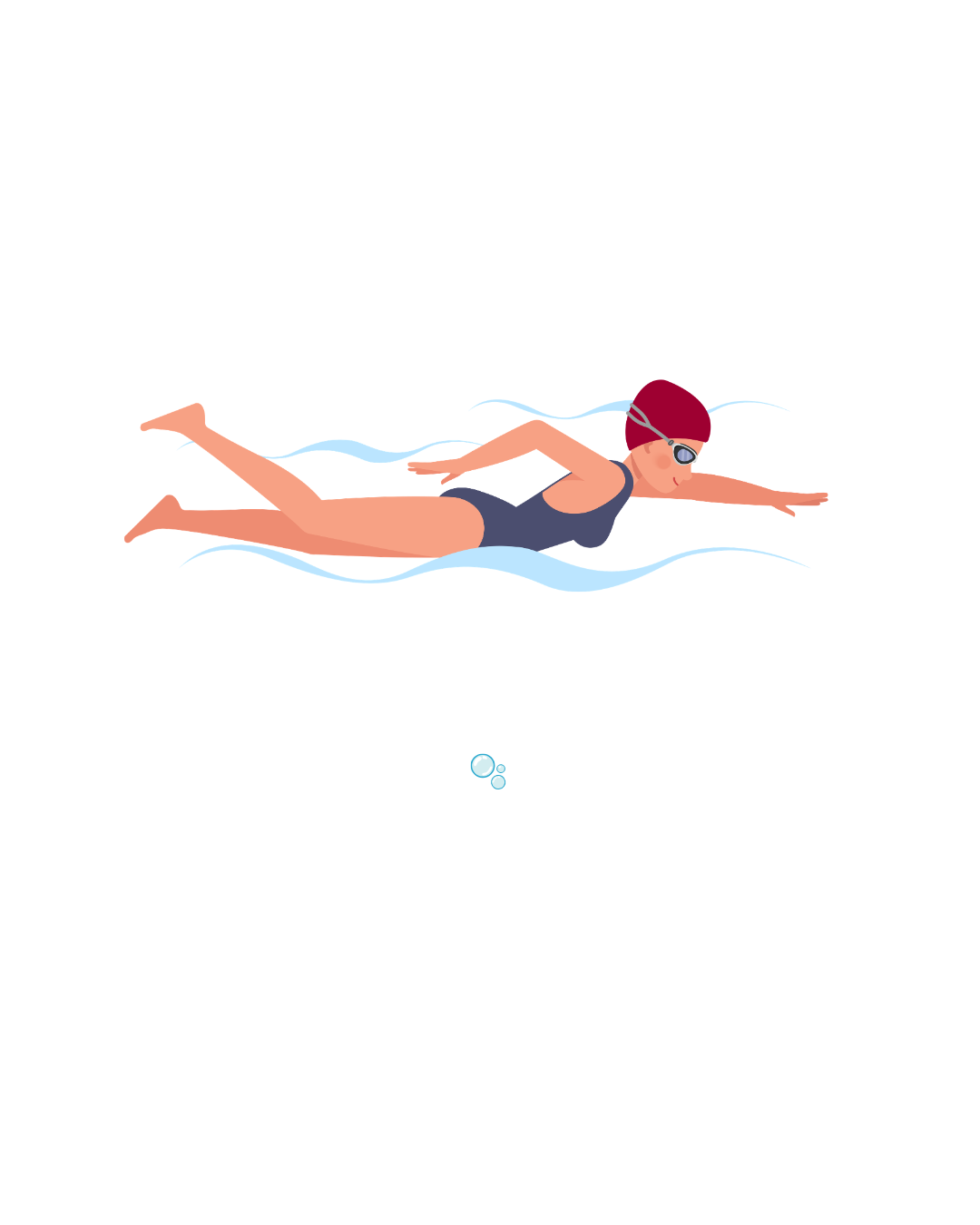
Ages 18-25:
Young adults often begin lessons as first-time swimmers or to build confidence after limited or missed childhood instruction.
Swimmers may seek lessons for:
• Water confidence and safety
• College or travel preparation
• Fitness and endurance
• Stroke development or refinement
Lessons are clear, goal-oriented, and fully individualized based on each swimmer’s experience and comfort level.
Focus Areas:
• Building confidence and reducing fear
• Developing practical swim skills and technique
• Improving endurance and efficiency
• Creating comfort and independence in the water
Progress is guided by consistency and comfort. Fear-based swimmers may progress more gradually, while technique improves through steady repetition — not rushing. It’s never too late to feel confident and capable in the water
Ready to move forward? Continue below to review enrollment options and rates, then submit your lesson placement inquiry.
Young Adult SKills:
Comfort in the water is the goal
Water comfort, Technique + confidence
Fitness or lifestyle swimming
Overcoming fear-based reactions
Sustained treading water
Floating and resting strategies
Swimming confidently in deeper water
Personal water safety awareness
Self-rescue techniques
Building confidence in recreational and fitness swimming
Adults
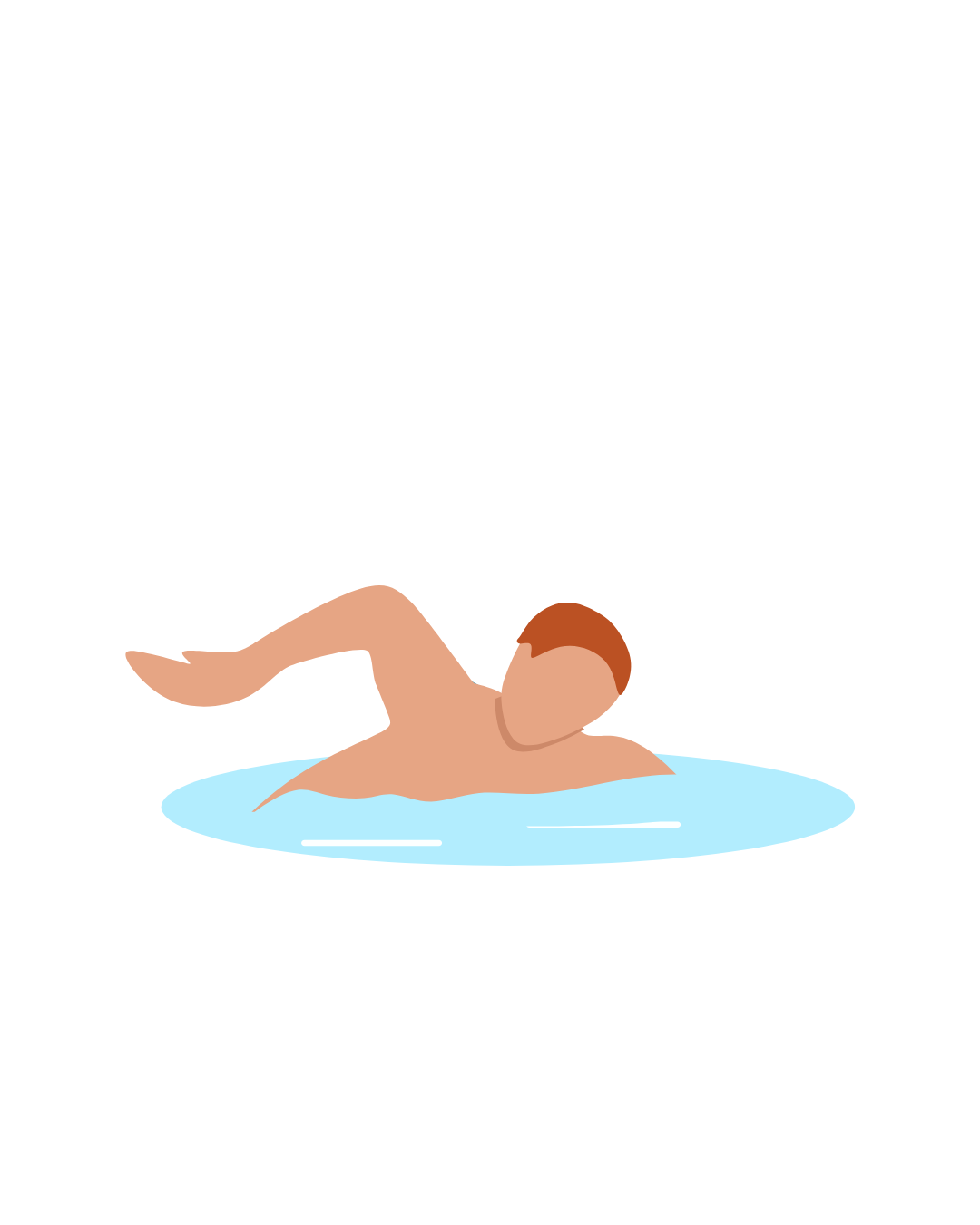
Ages 26+:
Progress at your pace, with your goals in mind.
Adult swimmers come with a wide range of goals and needs, including:
• Fear or anxiety around water
• Physical limitations or past injuries
• Fitness or rehabilitation goals
• Stroke improvement or endurance training
Lessons are fully individualized, paced appropriately, and designed to build confidence without pressure.
Focus Areas:
• Building comfort and reducing fear
• Developing practical, real-life swim skills
• Improving technique, endurance, and efficiency
• Supporting safe, independent movement in the water
This is a supportive, judgment-free environment — not a space for comparison.
Swimming is a lifelong skill, and it can begin at any time.
Ready to move forward? Continue below to review enrollment options and rates, then submit your lesson placement inquiry.
Adult SKills:
Build confidence in the water at your own pace.
Beginner or refinement
Fear-based support
Fitness, rehab, or lap skills
Panic control and breath regulation
Floating and resting techniques
Treading water confidently
Swimming to safety efficiently
Self-rescue skills
Water confidence in various environments
Personal safety awareness and decision-making
Supporting Fearful or Sensitive Swimmers
While many swimmers progress through lessons based on developmental stages, some swimmers benefit from additional support or a slower pace as they build comfort and confidence in the water. Many swimmers come to lessons feeling unsure, overwhelmed, or nervous around the water. This is especially common for children with sensory sensitivities, anxiety, or developmental differences such as autism.
Supportive Swim Lessons are adapted to meet each swimmer where they are emotionally and developmentally. The focus is on building trust, comfort, and confidence first, because meaningful skill development happens when a swimmer feels safe and supported.
Instruction may include:
• Slower introductions to the water
• Predictable routines and repetition
• Clear step-by-step skill breakdown
• Allowing extra processing time
• Sensory-aware approaches to water entry and submersion
• Adjusting expectations based on the swimmer’s readiness
Progress may look different for every swimmer, and that is completely okay. For some children, early lessons may focus on comfort, routine, and water familiarity before advancing to technical skills.
Parents are encouraged to share anything that helps their swimmer feel successful so lessons can be tailored appropriately.
Swimmers with autism, ADD/ADHD, anxiety, sensory sensitivities, and physical disabilities are welcome. Lessons are individualized to support each child’s learning style and comfort level.

If your swimmer has unique needs, feel free to reach out before booking so we can discuss the best approach.
Whether you're learning for the first time or returning to the water after time away, lessons are designed to help you feel capable, safe, and confident.
If you're ready to take the next step, submit a lesson placement inquiry to determine the best starting point for your swimmer.
Lesson Format
Choosing the Type of Lesson That Fits Your Swimmer
Lessons are available in several formats depending on the swimmer’s needs, comfort level, and learning style.
Types of Lessons
Not sure which option is best? Lessons can be adjusted based on your swimmer’s comfort level, learning style, and goals.
Private
👤 One Swimmer
Best For
-Beginners or hesitant swimmers
- Swimmers with disabilities
-Swimmers needing individualized attention
Focus
Personalized instruction, indivdualized attention, and faster skill progression.
Often Chosen For
Toddlers, preschool swimmers, beginners of any age, and adults learning or refining skills.
Private lessons are especially helpful for fearful swimmers, beginners who need extra patience, or swimmers with sensory or developmental needs.
All lesson formats can be adapted to support swimmers who are fearful, neurodivergent, or need a more individualized approach.
Fast-Track
⚡ Many Lessons Per Week
Best For
-Faster, more focused progress
-Building momentum through consistency
-Efficient and engaging
Focus
Frequent lessons designed to reinforce skills through repetition and consistency.
Often Chosen For
Open to all ages; Ideal option to jump start lessons for fearful or hesistant swimmers as well as younger kids. Appropriate for school-age swimmers who have the attention span, motivation, and stamina for consecutive daily or near-daily lessons.
Private Lessons
⭐ Most Popular
One-on-one instruction tailored to the swimmer’s pace, skill level, and goals. Lessons are designed around each swimmer’s comfort level to build confidence and strong foundational skills.
Private lessons allow for customized instruction, faster skill development, and individualized support.
.
Fast- Track Lessons
⚡ Faster Progress
This is one of the most effective ways to build skills quickly.
Lessons are scheduled multiple days in a row to strengthen skills through consistent repetition. Skills are practiced and reinforced before the body and brain “reset” between sessions.
Ideal for early elementary and school-age swimmers
Sibling / Family
👨👩👧👦 2–4 Swimmers
Best For
-Larger families with multiple swimmers
-Siblings with similar skills and abilities
-Shared scheduling
Focus
Shared lesson times either as a group or back-to-back with individualized guidance.
Often Chosen For
Family group lessons are appropriate for swimmers in the same family who are close in age and abilitiy, capable of participating in either lessons together simultaneously. Back-to-back lessons are best for siblings that benefit from seperate lessons.
Small Group
👥 3–4 Swimmers
Best For
-Confident, social swimmers
-Friends who want to learn together
-Positive influence of practicing skills with peers
Focus
Shared lessons that combine social learning and skill reinforcement.
Often Chosen For
Early elementary and elementary swimmers who focused instructional blocks and peer interaction.
Many families choose to invite a friend or swimmer of similar age and ability to create their own small group lesson.
Sibling or Family Lessons
👨👩👧👦Family-focused
Lessons designed for siblings and immediate family members who prefer learning together on the same day. Swimmers may participate together in a shared lesson or in back-to-back individual lessons, depending on age, ability, and family preference.
👉 Request placement and I’ll help recommend the best lesson format for your swimmer.
Small Group Lessons
🧒👦Social Learning
Cost-conscious lessons allowing confident swimmers to learn alongside peers, giving each swimmer opportunities to observe, practice, and receive guidance.
Small groups are intentionally limited to preserve safety, engagement, and meaningful instruction.
How Lessons Are Scheduled
Session Length
Lessons are typically offered in 30, 45, or 60-minute sessions, depending on the swimmer’s age, stamina, and learning goals.
• 30 minutes – ideal for most young swimmers and beginners
• 45 minutes – helpful for developing swimmers or shared lessons
• 60 minutes – best for older swimmers or advanced skill development
Lesson Frequency
Swimmers may participate in lessons through several scheduling approaches depending on their goals and availability.
• Weekly lessons
• Multiple weekly lessons (recommended for stronger skill retention)
• Fast-track programs (recommended to jump start progress)
Lesson Expectations
Swimming progress looks different for every swimmer
Lessons focus on building lasting water confidence, safety skills, and strong technique. Because every child learns differently, there is no guaranteed timeline for swimming independence or skill mastery. Some swimmers progress quickly, while others need more time to feel comfortable and confident in the water.
Consistent exposure to the water is one of the most important factors in a swimmer’s progress. Lessons provide guidance, structure, and skill development, but swimmers benefit most when they continue practicing and playing in the water between lessons.
Swimmingly lessons work best as a partnership between instructor, swimmer, and family. Parents and caregivers play an important role in supporting their swimmer’s learning by encouraging water time, reinforcing skills, and helping build comfort and confidence outside of scheduled lessons.
The goal is not simply completing a certain number of lessons, but helping swimmers develop lasting swimming ability and confidence in the water.
How Families Can Support Their Swimmer
Families help swimmers make the most progress when lessons continue beyond the time we spend together in the pool.
Helpful ways to support your swimmer include:
Practicing water comfort and skills between lessons when possible
Reinforcing pool safety rules and repeating the same expectations swimmers hear during lessons
Maintaining active supervision in and around the pool area
Encouraging swimmers to pause, wait, and enter the pool safely rather than rushing in
Building consistent safety habits, such as waiting at doors or gates and entering the water in the same safe way each time
Repeating the same safety habits consistently helps them become second nature for swimmers over time.
The goal is not just short-term swimming skills, but helping children develop lifelong comfort, awareness, and safety around water.
Children learn best when the same expectations and safety habits are reinforced consistently at home and during lessons.
Swimming ability develops through confidence, repetition, and positive experiences in the water — not pressure or rushed timelines.